The Complete Guide to Panama Hats: Why They’re Actually Ecuadorian
Handwoven in Montecristi, Ecuador — 30 minutes from the Port of Manta
Here is the first thing to know about the Panama hat: it is not from Panama. It never was. The genuine article has been woven by hand in the coastal province of Manabí, Ecuador — a 30-minute drive from where our tours begin in Manta — for more than four centuries. If you have ever wanted one, or ever wondered why something so Ecuadorian carries another country’s name, this guide is for you. We wrote it because half the guests we take to Montecristi arrive believing the myth, and all of them leave wanting the real thing.
The short version: geography and a US president.
Ecuadorian weavers were making these hats long before the name stuck. Through the 1800s, the hats were shipped north through the Isthmus of Panama — the great trading crossroads of the Americas — where gold-rush miners heading to California bought them by the thousand. Buyers naturally called them after the place they bought them, not the place they were made. The name was sealed in 1906, when President Theodore Roosevelt was photographed wearing one while visiting the construction of the Panama Canal. The photograph went around the world; the misnomer went with it.
So the name is a shipping accident that never got corrected. Ecuadorians have their own names for it — the sombrero de paja toquilla, or simply the Montecristi, after the town that weaves the finest examples of all.
The hat is woven from the toquilla palm — Carludovica palmata — a fan-leafed plant that grows along Ecuador’s coast. It isn’t really a palm at all, but the name has stuck as firmly as “Panama” has. The young, unopened shoots are harvested, split by hand into fine straw, boiled, and dried until they turn the pale ivory you see in a finished hat. Only then does the weaving begin.
In 2012, UNESCO recognised the weaving of the Ecuadorian toquilla straw hat as Intangible Cultural Heritage of Humanity — a formal acknowledgement of what Manabí has known for generations: this is not a souvenir trade, it is an art form passed down through families.
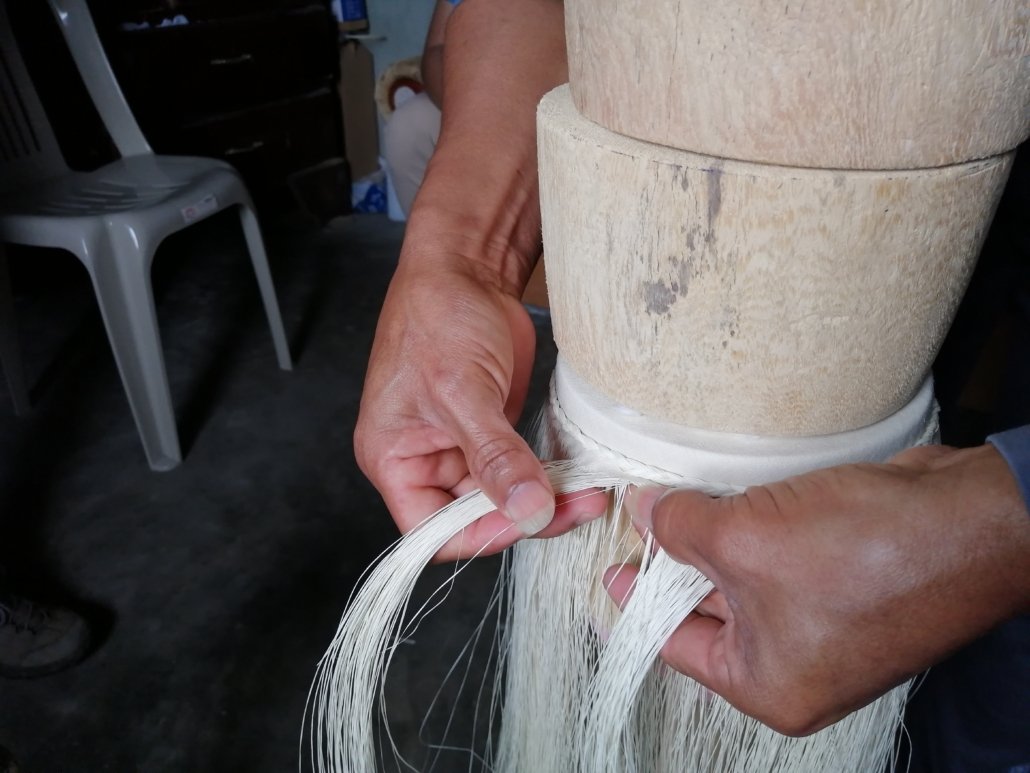
Watch a weaver work and the price of a fine hat stops seeming strange.
The weave begins at a single point at the very centre of the crown — the plantilla — and spirals outward, each straw crossed over the next by hand, tightened against a wooden block. There is no machine for this. The finest weavers work in the early morning and late evening, when the humidity keeps the straw supple and the light is soft enough to see the threads; the midday heat makes the straw brittle and the fine work impossible.
The quality of a hat is measured by the fineness and evenness of its weave — loosely, the number of weaves per inch. A coarse tourist hat might take a day. A standard everyday Panama takes a week or two. And a Montecristi superfino — the finest grade, with a weave so tight the hat can hold water and so supple it can be rolled and passed through a wedding ring — can take a single master weaver six to eight months to complete. Fewer than a dozen weavers alive can still make the very finest. That is why a true superfino can cost thousands of dollars, and why it is worth every cent to the people who understand it.
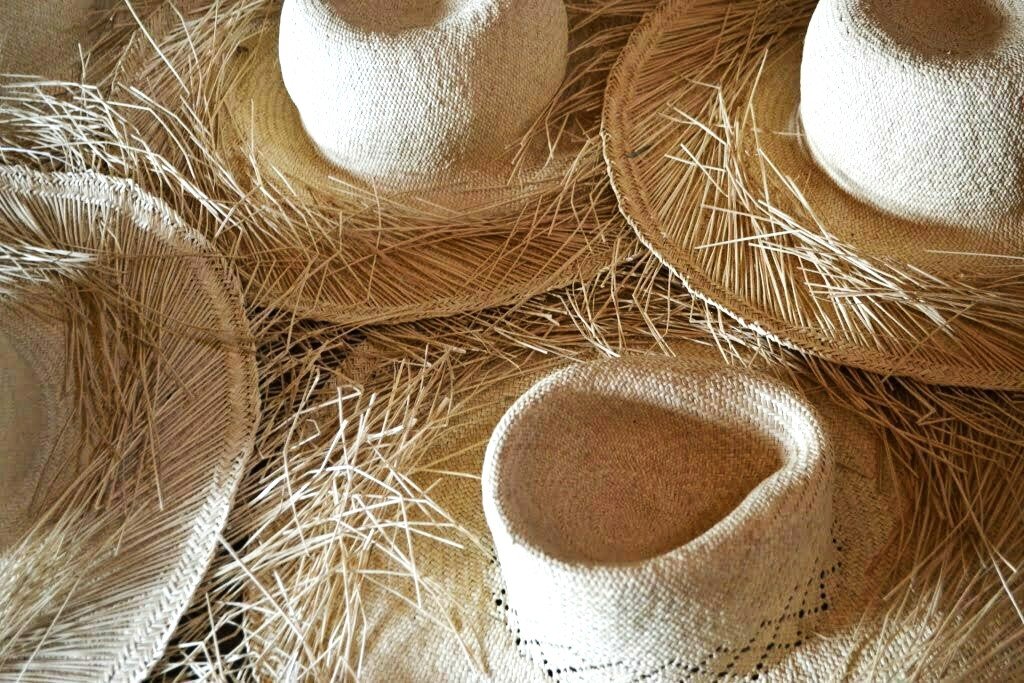
You do not need to buy a superfino to own a genuine hat. But you should know how to tell a real toquilla-straw Panama from a machine-made imitation. Here is what to look for:
A quick word on grades, because sellers throw numbers around: the scale rises with the fineness of the weave, from around grade 3 (coarse, tourist) through the everyday 5–8, up to the premium 10–14, and into the Montecristi range of 15–20 and beyond for superfinos. The scale isn’t perfectly standardised between shops — so trust your eyes and hands more than the label.
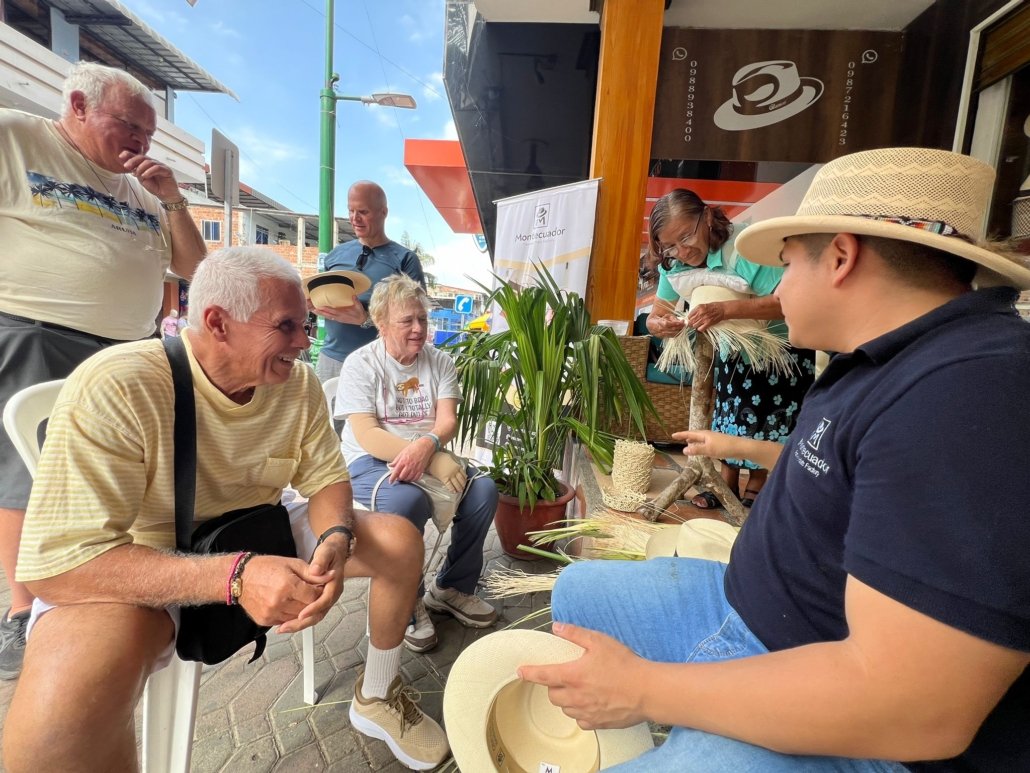
You can read all of this, or you can sit down across from a weaver and watch the straw turn into a hat in front of you. That is what we do on our Manta and Montecristi tours.
Montecristi is a small, sun-baked town about 30 minutes from the Port of Manta, and it is the beating heart of the craft. We take our guests into working ateliers — not gift shops, but the places where the hats are actually made — to meet the weavers, see the wooden blocks and the hydraulic presses that shape the crown, and understand what they are looking at before anyone talks about buying.
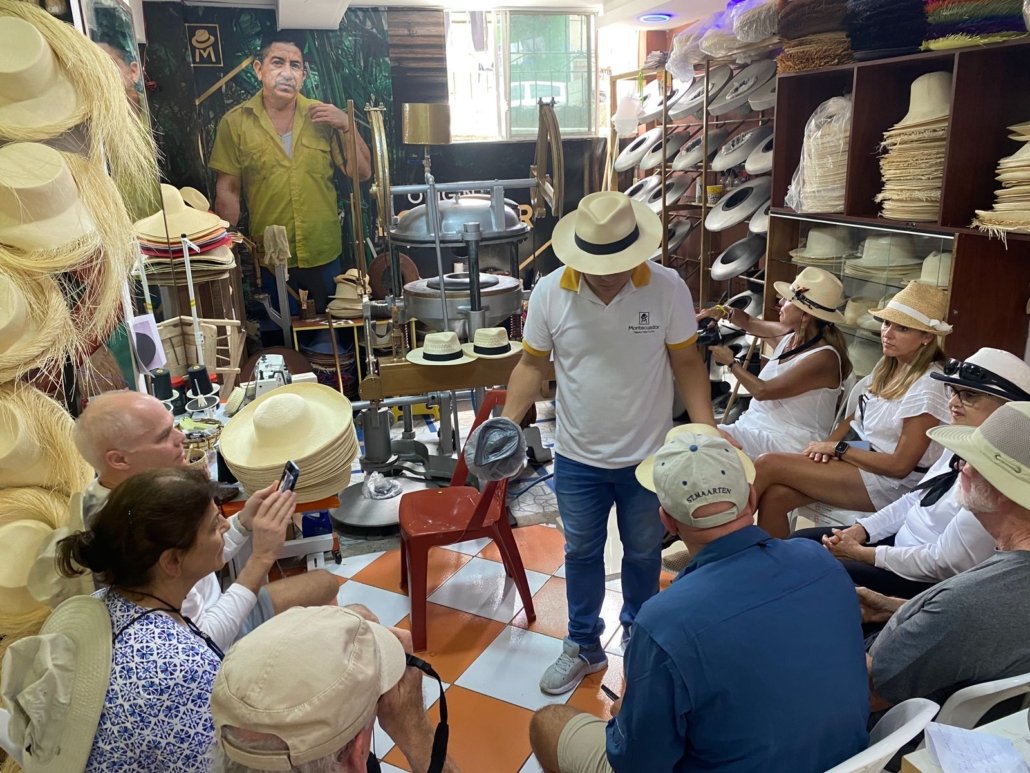
And if you do want to take one home, this is the place to do it: bought at the source, from the people who made it, at a fraction of what the same hat costs in a boutique in Quito or New York. Our guides will help you tell the grades apart and make sure you pay a fair price for a genuine one — no pressure, no commission games, just the honest article. Montecristi also features on our fuller A Taste of Ecuador day, alongside the Pacoche forest and a local lunch.
Yes. Genuine Panama hats have always been woven in Ecuador, chiefly in the coastal province of Manabí and the town of Montecristi. The name comes from the hats being shipped and sold through Panama in the 1800s, not from where they are made.
It is the finest grade of Panama hat, woven in and around Montecristi, Ecuador. The best examples have thousands of weaves per square inch, can take six to eight months to complete, and are made by only a handful of master weavers. They are considered the finest straw hats in the world.
Look for a weave that spirals from a single point at the centre of the crown, even and continuous rows, a light and springy feel, a natural ivory colour rather than bright white, and Ecuadorian origin. Machine-made imitations usually fail on the centre point and the evenness of the weave.
In Montecristi, about 30 minutes from the Port of Manta, where the hats are actually woven. Buying at the source means better prices and genuine articles. Our Manta and Montecristi tours include visits to working ateliers.
A genuine everyday hat can start at around $25–40. Finer grades run higher, and a true Montecristi superfino can cost several thousand dollars, reflecting the months of skilled handwork involved.
The Panama hat is one of the great misnamed treasures of the world — and it is Ecuadorian to its core. If you are arriving in Manta by cruise ship or travelling the coast, a visit to the weavers of Montecristi is one of the most memorable half-days the region offers. See our Manta & Montecristi tour, or message us on WhatsApp with your ship name and date.
 https://www.narwelltours.com/wp-content/uploads/2013/01/Manta-Mercado-de-los-pescados-7.jpg
960
1280
admin
https://www.narwelltours.com/wp-content/uploads/2019/03/LOGO-PNG2-1030x749.png
admin2018-10-02 10:20:212026-08-11 08:27:46Things to do in Manta: The Shipyard
https://www.narwelltours.com/wp-content/uploads/2013/01/Manta-Mercado-de-los-pescados-7.jpg
960
1280
admin
https://www.narwelltours.com/wp-content/uploads/2019/03/LOGO-PNG2-1030x749.png
admin2018-10-02 10:20:212026-08-11 08:27:46Things to do in Manta: The Shipyard https://www.narwelltours.com/wp-content/uploads/2014/08/Sendero-del-mono-9.jpg
400
600
admin
https://www.narwelltours.com/wp-content/uploads/2019/03/LOGO-PNG2-1030x749.png
admin2018-06-27 18:07:262026-08-11 08:27:59Things to do in Manta: The Pacoche Forest
https://www.narwelltours.com/wp-content/uploads/2014/08/Sendero-del-mono-9.jpg
400
600
admin
https://www.narwelltours.com/wp-content/uploads/2019/03/LOGO-PNG2-1030x749.png
admin2018-06-27 18:07:262026-08-11 08:27:59Things to do in Manta: The Pacoche Forest
Cdla. Barbasquillo 130802
Manta – Ecuador
Phone: +593 99 553 8794